
2-YOKAI: Andy Fedak and Bruce Yonemoto
On view March 7 through August 1, 2026
A new multimedia installation by artists Andy Fedak and Bruce Yonemoto, 2-YOKAI, brings together animation, film, and installation to explore the Japanese mythological spirits known as Yokai, specifically the Kappa and the Nurikabe, through surrealist narratives that draw on Japanese folklore to understand our own contemporary world.
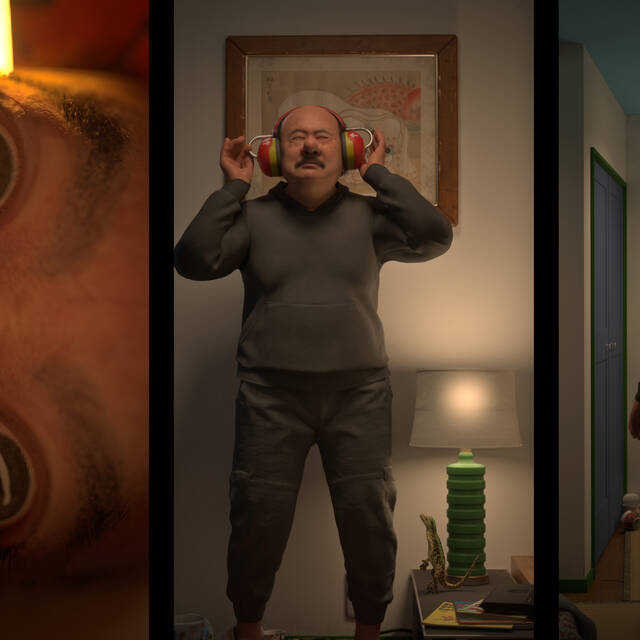
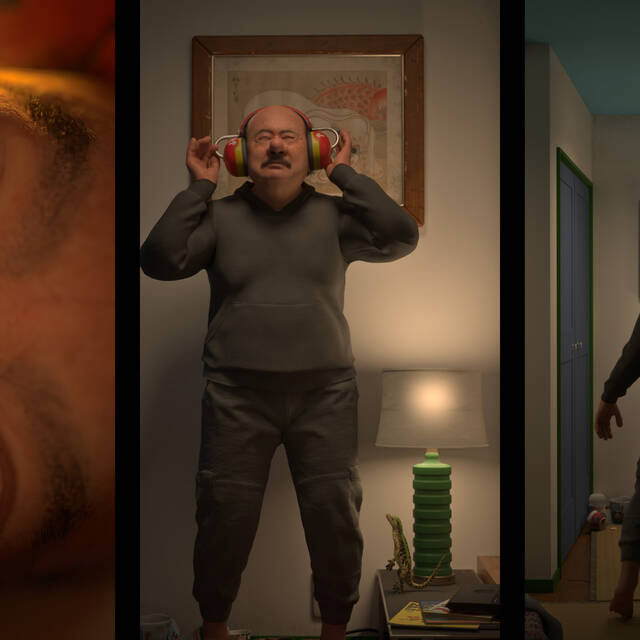
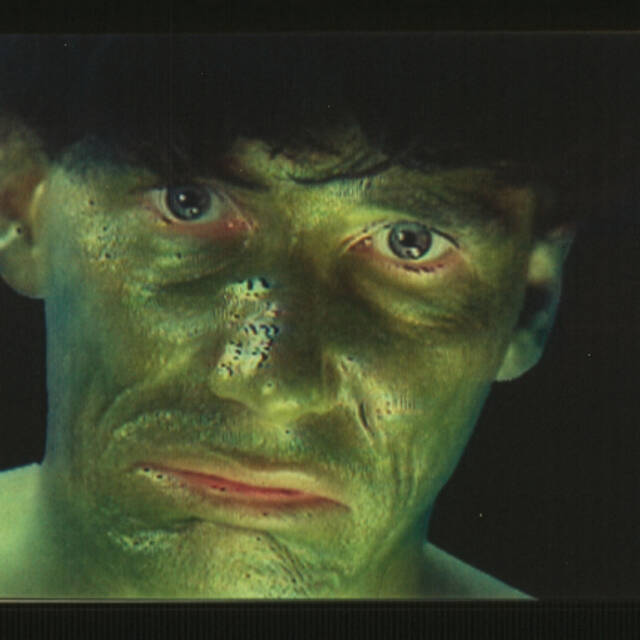
In Hikikomori-0 (2025), filmmaker Andy Fedak blends contemporary cultural motifs with Japanese folklore in the character “Brucio,” a composite of artist Bruce Yonemoto and a popular Japanese video game character. A series of six high-end, handcrafted 3D-animated vignettes, utilizing cutting-edge motion and facial capture, brings Brucio to life in performances that are interminably sad yet also hopeful.
In each vignette, Fedak represents the Nurikabe (a folkloric creature likened to an invisible, impassable wall) as an invisible barrier Brucio cannot cross. The work connects myth with the global phenomenon of hikikomori, a form of self-seclusion that was originally defined by the Japanese. While Brucio is trapped, he may finally find his way outside with the help of his friends: a small green lizard and his brother.

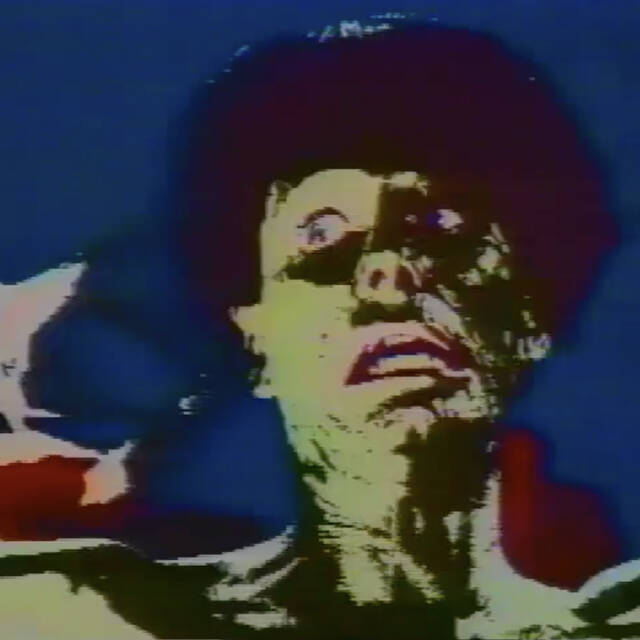
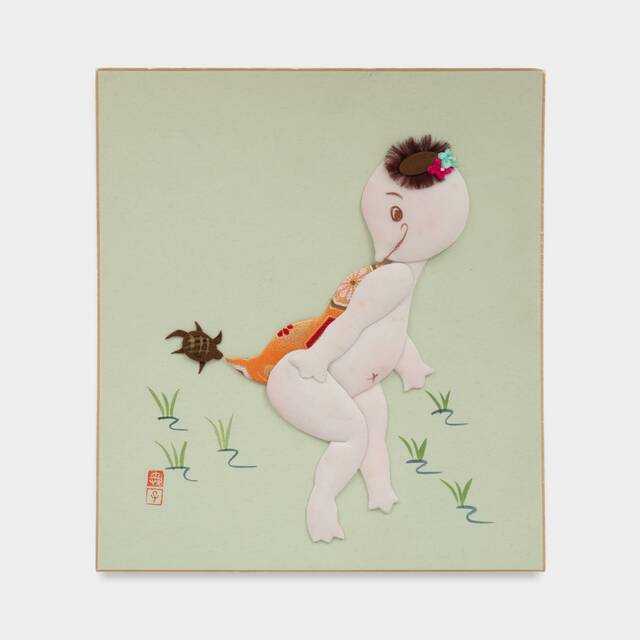
Kappa (1987) was conceived and created by Bruce Yonemoto with his brother Norman Yonemoto (1946-2014) and produced in collaboration with Mike Kelley (1954-2012). Juxtaposing the myth of Oedipus with the ancient Japanese story of Kappa, this landmark work crafts a highly charged treatise of loss and desire. Featuring Kelley as Kappa, with appearances by actress Mary Woronov and artist Ed “Eddie” Ruscha, the film demonstrates the enduring power of cultural archetypes.
Accompanying the screening of Kappa are related ephemera, including archived illustrations and storyboards by Mike Kelley, as well as Kappa figurines from Bruce Yonemoto’s research collection.
Andy Fedak is a Los Angeles-based artist and educator who works with image, sound, and computer graphics on projects that blur the line between contemporary art and the Hollywood blockbuster. Dealing with subject matter of social unrest and anarchist utopias, Fedak utilizes photorealistic computer-generated elements to open a space of creativity that would otherwise be impossible due to cost, size, or public safety. He received his MFA from the University of California, Irvine, and his BFA in Film and Television from New York University. His work has been shown at LAXART (now The Brick) in Los Angeles, The Palace of Fine Art in Mexico City, the Ottawa International Animation Festival, and other venues in the Americas and Europe. He currently serves as Professor and Area Coordinator, Game Art, Animation, and Immersive Media at California State University, Fullerton.
Bruce Yonemoto has worked extensively as a video and digital media installation artist, educator, writer and curator. Having received his MFA from Otis, he began working in the late 1970s in collaboration with his brother, the late artist Norman Yonemoto. His early single channel videos explore the effects of mass media on perceptions of personal identity and romantic love. Since 1989, his solo work has comprised experimental cinema and video art within the context of installation, photography and sculpture. Yonemoto has long been a proponent of the integration of fine arts and media, developing in the past three decades bodies of work positioned among the overlapping intersections of art and commerce. He believes that the composition of mass media has become a new historical site of the domination of human behavior.
Yonemoto has been honored with numerous awards and grants, from organizations including the National Endowment for the Arts, the American Film Institute, The Rockefeller Foundation, and the Maya Deren Award for Experimental Film and Video. In 1999, Yonemoto was the focus of a mid-career survey exhibition at the Japanese American National Museum in Los Angeles. Additional solo exhibitions include venues such as Alexander Gray Gallery in New York; Tomio Koyama Gallery in Tokyo; the InterCommunication Center [ICC] in Tokyo; the Institute of Contemporary Art [ICA] in Philadelphia; the St. Louis Art Museum; and the Kemper Museum in Kansas City. Major group exhibitions include Los Angeles 1955-85 at the Pompidou Center, Paris (2006); and the 2008 Gwangju Biennial.
Peter and Merle Mullin Gallery
South Campus
1111 S. Arroyo Parkway
Pasadena, CA 91105
Gallery Hours:
Wednesday – Saturday, 12–5 p.m.
Reservations recommended.
Connect
Help Make Exhibitions Like This Possible
Your support brings artists, students and our community together through exhibitions and programs that are free and open to everyone.
Works in the Exhibition
ArtCenter Exhibitions Presents
View artist video works, talks and panels from current and past exhibitions.